The man who wears jewellery with confidence is not performing. He is not following a trend, and he is not making a statement for anyone else’s benefit. He simply knows what suits him, and he wears it. That is the beginning and end of men’s jewellery.
Men have worn jewellery for as long as there have been men. The ancient Greeks wore gold rings as markers of citizenship. Roman generals adorned themselves with laurel wreaths and engraved seals. The Ottoman sultans layered jewels with an extravagance that would make a modern maximalist hesitate. Even the supposedly restrained British aristocracy wore signet rings, cufflinks, and watch chains as a matter of course throughout the 19th and 20th centuries.
The notion that jewellery is not “for men” is historically recent, culturally narrow, and, frankly, being quietly retired. Contemporary menswear — from the editorials of GQ and Esquire to the red carpets of Venice and Cannes — has embraced male adornment as fully and seriously as any era before.
This guide is for any man who is considering wearing jewellery, or who already wears it and wants to do so with more intention. It covers everything: how to start, what pieces to choose, how to wear them, how to care for them, and how to build a jewellery wardrobe that reflects who you actually are.
Why Men Wear Jewellery: Starting With the Right Question
Before choosing any piece, it is worth asking why you want to wear it. This is not a rhetorical question — it shapes everything about which piece is right for you.
- Is it for identity — a piece that says something about who you are, what you believe, where you come from?
- Is it for continuity — a piece inherited or gifted, worn to carry a connection to someone or something?
- Is it for style — a piece that simply looks excellent and elevates how you present yourself?
- Is it for protection or meaning — a talisman, a cross, a symbol worn close to the body as both reminder and shield?
Most men, if they are honest, wear jewellery for several of these reasons at once. And that is exactly as it should be. The best jewellery pieces are the ones that hold multiple meanings simultaneously — practical beauty, personal significance, and considered style in a single object.
Where to Start: The First Piece
For most men, the first jewellery decision is not a ring or a necklace — it is the watch. But the watch occupies its own category. For jewellery proper, the natural starting point is a necklace or pendant worn close to the chest, often invisible beneath a shirt and revealed only deliberately.
This is a good entry point for several reasons. It carries no dress-code implications (a necklace does not need to be removed for a formal meeting in the way a statement ring might invite comment). It is deeply personal — worn against the skin, often never removed. And it allows you to find your feet with jewellery before adding more.
The Pendant
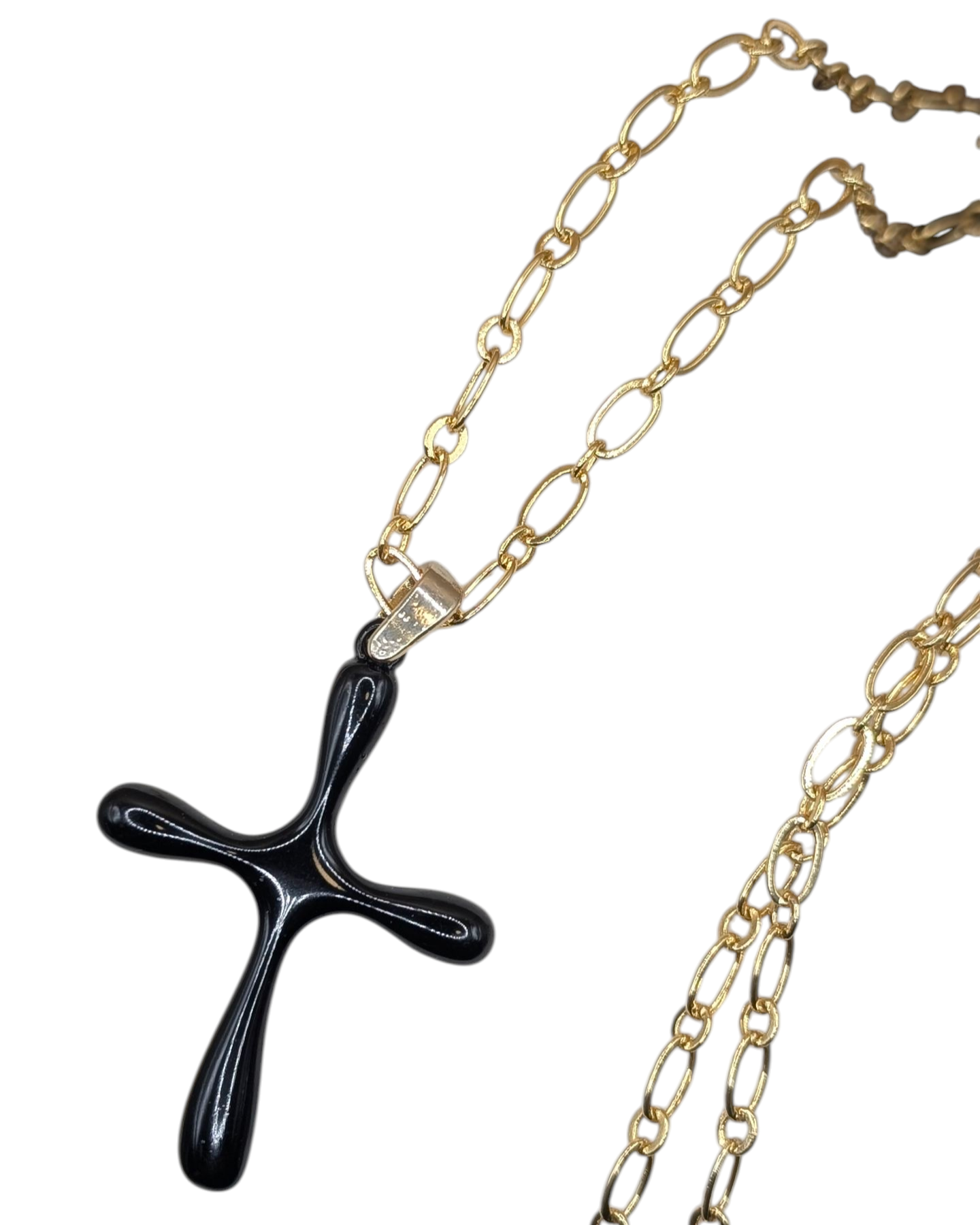
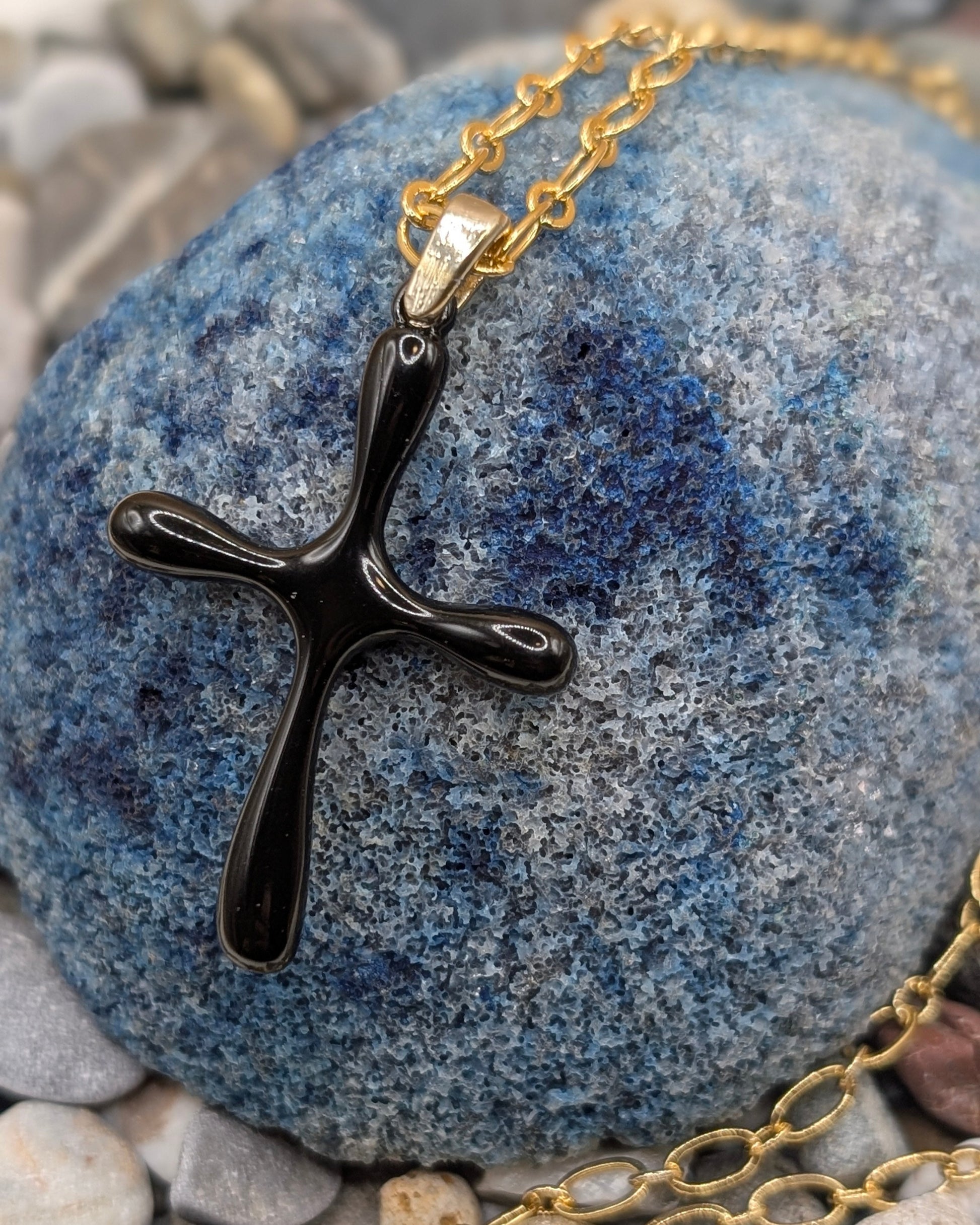
A pendant is the most personal of men’s jewellery choices because it almost always means something. A cross, worn by men of faith across centuries and cultures. An evil eye, the ancient Mediterranean talisman of protection that has moved from folk tradition to fine jewellery without losing its power. A symbol specific to where you are from, who you love, or what you believe.
Gold Cross Necklace – Classic Faith Jewellery
A cross in gold is among the most enduring pieces of men’s jewellery in existence. This clean, well-proportioned gold cross on a fine chain is designed to be worn daily: its scale is understated enough to sit beneath a shirt, its quality sufficient to be worn openly with confidence. This is a first piece in the truest sense — one you put on and do not take off.
Shop NowGold Evil Eye Sun Necklace – Protection Pendant
The evil eye is one of the oldest protective symbols in the Mediterranean world — a tradition native to Greece, Turkey, the Levant, and beyond, worn for thousands of years by men and women alike. This gold sun-and-eye pendant carries that history while maintaining a quietly contemporary presence. For the man who wears meaning close to the body.
Shop NowGold Pendant Necklace with Kos Island Shape
For those with a connection to Kos — or to any island, coast, or place that has shaped them — this pendant offers something that generic jewellery cannot: specific, irreplaceable personal meaning. The shape of an island rendered in gold is not decoration. It is cartography of the self.
Shop NowThe Chain: Wearing It, Choosing It, Getting It Right
A chain necklace worn without a pendant is a statement in its own right. It sits differently on a man than a pendant: looser in spirit, more relaxed in register. It reads as considered rather than devotional. And when the chain itself has quality — real weight, real material, real construction — it is immediately apparent.
The rules for wearing a chain are simple. Choose one that sits at the right length for your neckline: a shorter chain (16–18 inches) sits at the collarbone and works beautifully with an open collar; a longer chain (20–24 inches) falls to the chest and can be worn beneath a shirt for a glimpse when you move.
Bar Chain Necklace
Bar link chains have a satisfying solidity that rope or cable chains do not. Each link is distinct, architectural, precise. Worn with a relaxed open shirt, this necklace communicates the particular kind of easy confidence that is the whole point of understated men’s jewellery. The weight of it against the chest is itself part of the experience.
Shop NowThe Ring: Presence, Weight, and What It Says
A man’s ring is perhaps the most noticed piece of jewellery he wears, because the hand is always visible, always in motion, always in the frame of any interaction. This makes ring choice consequential — not in the sense of risk, but in the sense of opportunity. A well-chosen ring is the most reliable way to elevate how you are perceived.
Signet Ring
The oldest tradition in men’s jewellery. Worn on the little finger or index finger. The classic choice for those who want authority without ostentation.
Statement Ring
Worn as the focal point of the hand. One ring, worn prominently. Nothing else on that hand needs to compete.
Wrap Ring
A ring with sculptural ambition — the snake wrap being the most iconic. Commands attention quietly and rewards close inspection.
Band Ring
Clean, architectural, modern. Often geometric in form. The ring for the man whose style is built on restraint.
Black Rectangular Signet Ring
The entry point to men’s ring wearing, and a near-perfect one. The rectangular signet form is classically proportioned; the black face gives it a modern, graphic quality that reads as contemporary without being of-the-moment. Wear on the little finger of the non-dominant hand, as tradition dictates — or wherever feels right, as the present dictates.
Shop NowGeometric Steel Statement Ring
Architecture made wearable. The geometric form is precise and deliberate; the steel finish gives it weight and permanence without the price of gold. For a first statement ring, this is an ideal choice — bold enough to make its presence known, restrained enough to wear anywhere.
Shop NowThe Bracelet: Wrist Dressing for Men
The wrist is an underused canvas in men’s dressing. Beyond the watch, it is typically left bare — which is precisely why a single well-chosen bracelet has such impact. You are not competing with anything. The bracelet stands alone.
The rules for men’s bracelet wearing: keep it on the opposite wrist to your watch, unless you are deliberately mixing both. Choose pieces with substance — a chain bracelet that is too delicate will disappear against a man’s wrist. And resist the urge to over-stack: one strong piece, or at most two complementary pieces, is almost always more effective than three.
Silver Cable Cuff Bracelet
A cuff worn on the wrist is one of the most confident jewellery choices a man can make — it is visible, deliberate, and unmistakably intentional. The cable texture of this sterling silver cuff adds artisanal quality without decoration for its own sake. Worn alone, it is a complete statement. This is the wrist piece that works as easily with a shirt rolled to the elbow as it does beside a jacket cuff.
Shop NowGold-Tone Steel Rope Chain Bracelet
The rope chain bracelet is the most classical of men’s wrist pieces. Its twisted form has weight and movement; the gold tone warms the wrist without the formality of solid gold. An accessible, versatile, and genuinely well-designed piece for the man starting to explore what jewellery can do for his daily dressing.
Shop NowHow Much Is Too Much? The Rule of Three
Men often ask how many pieces they should wear at once. The answer, as with most things in style, depends on the context — but a useful heuristic is the rule of three: no more than three jewellery pieces at any one time, across all categories combined. One necklace, one ring, one bracelet. Or one chain, two rings. Or one pendant, one cuff, no rings. The specific combination is yours to choose; the discipline of the number is not.
This rule exists not to restrict, but to focus. Every piece you wear should be there because you chose it, not because you forgot to take it off. Jewellery worn with intention always reads better than jewellery accumulated by habit.
Caring for Men’s Jewellery
Men tend to wear jewellery harder than women — more physical activity, more contact with water and salt air, less careful removal. This makes material choice and care especially important. Gold is the most resilient precious metal for daily wear; sterling silver requires more attention but rewards it with beauty. Steel pieces are the most durable and suit the man who needs his jewellery to keep pace with him.
Clean your pieces monthly with a soft cloth and, for harder metals, warm water and a drop of mild dish soap. Store necklaces and chains flat or on a dedicated hook to prevent tangling. And for any piece with a gemstone, keep it away from household chemicals, perfume, and prolonged sun exposure.
Our complete jewellery care guide covers everything you need by material and piece type.
The Sifonios Gentlemen’s Edit brings together pieces chosen for the man who wears jewellery with intention — from first pendants to considered statement rings, from everyday chains to the cuff that becomes part of his signature.
Explore The Gentlemen’s Edit